
Our most common deadlatch call: a door that clicks shut yet cards open. A deadlatch is a spring latch with a second pin that locks it once the door closes; when that pin fails, the door only looks locked. King Locksmith and Doors Inc., licensed, insured and bonded, repairs, replaces and installs deadlatches across Maryland, Washington DC and Northern Virginia.
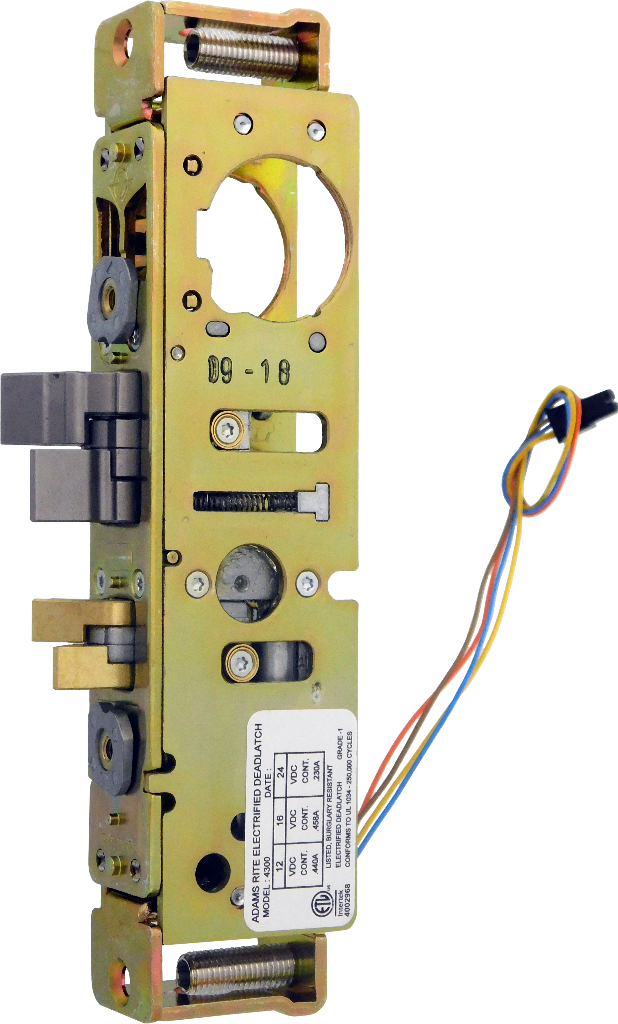
A deadlatch has two parts: the latch bolt, the tongue holding the door shut, and beside it a short pin, the deadlocking plunger. When the door closes, the strike plate on the frame holds that plunger in, locking the bolt against being pushed back. Keyed levers get it; passage sets do not.
Most DMV doors: a 2-1/8 inch cross bore, the hole through the face, a 1 inch edge bore and a 2-3/4 inch backset, edge to center; the bolt throws 1/2 inch into a 4-7/8 inch ANSI strike. Aluminum storefronts run narrow-stile versions. Fire doors must self-latch; under NFPA 80, the fire door standard, pairs commonly need a 3/4 inch throw.
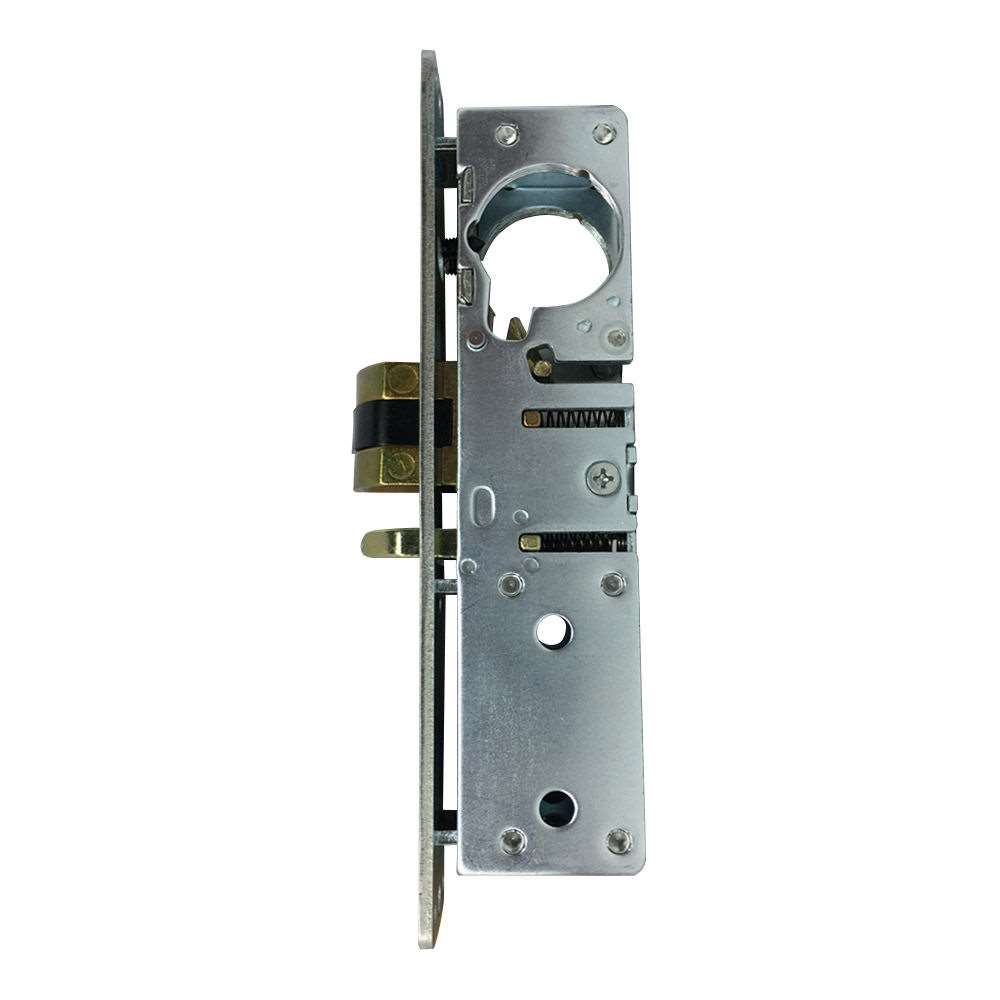
Close the door and it locks itself against a card: the plunger holds the bolt the moment the strike presses it, nothing extra to turn or remember. Inside, one turn of the lever still opens the door, so exits stay clear.
Because the holes are standard, a Grade 1 lever set, the top commercial rating, drops into the 2-1/8 inch bore without new drilling. A 3/4 inch throw latch meets what most rated door pairs require. Still on a plain latch? Upgrading takes one visit.
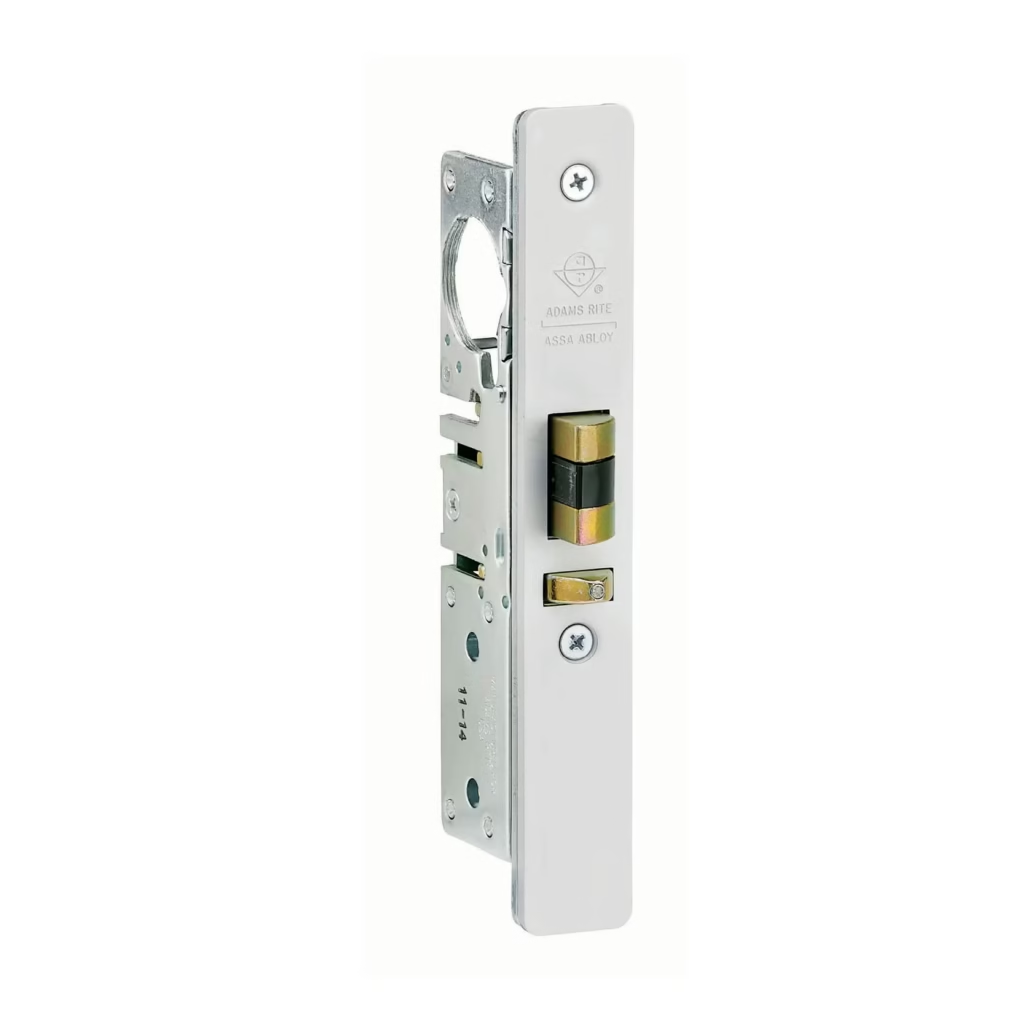
Our deadlatch locksmiths see the same doors: aluminum storefronts at shops and restaurants, office suite doors on 2-3/4 inch backset lever sets, school corridors, multifamily unit entries and government facility doors across North Virginia.
It is the wrong choice as the only lock on a door shut all night. A 1/2 inch latch is a convenience lock, not a security bolt, so an after-hours storefront adds a deadbolt beside it. Unsure which your door needs? We survey it free.
Tell us the door: storefront, suite, corridor or unit entry. We check the latch, strike and fit on site, then quote the right hardware, free.
Five brands ride on our trucks because their deadlatches hold up under traffic: parts we carry, bolts that keep locking, sizes that match your door.
Adams Rite 4510 fits aluminum storefront doors at four backsets, 7/8 to 1-1/2 inch, and swaps into a same-backset MS deadbolt cutout without any cutting.
Schlage ND deadlatches come in 2-3/4 and 2-3/8 inch backsets plus a 3/4 inch throw for fire pairs, stocked on our trucks for same-visit repairs.
Best 9K pairs a 9/16 inch deadlatch with interchangeable cores, keyed sections a control key swaps in seconds, so whole buildings rekey without pulling locks.
Falcon T deadlatch levers accept most conventional cylinders, small format cores and Schlage full size cores, so new sets take the keys your building uses.
The plunger drops into the strike opening, from a misaligned strike or a gap past 1/8 inch, so a card slips the latch. The latch stops retracting: a worn retractor, the part that draws the bolt, or a bent spindle, the bar behind the lever. On storefronts, grit and weather seize the bolt; the door closes unlatched.
Door closed, we check gap, strike alignment and where the plunger lands; door open, throw, spring return, lever action. Locked out? Mobile units respond 24/7. Call (240) 345-1455 in Maryland or (202) 800-2622 in Washington DC and NOVA.
A dropped plunger: we shift the strike or fit a narrower opening so the plunger rides its face. A latch that will not retract gets a retractor, spindle or latch from the truck. Seized storefront bolts get a new latch, not a clean-up. Repair wins while the body holds.
Deadlatch replacement follows attack damage, discontinued parts or wrong function: we match backset, throw, strike and finish to the old holes, rekeyed to your current key where the keyway, the key profile, allows. Deadlatch installation is measure, match, install, test lock and exit. Our in-house door expert fixes frame and alignment same visit; estimates are free.
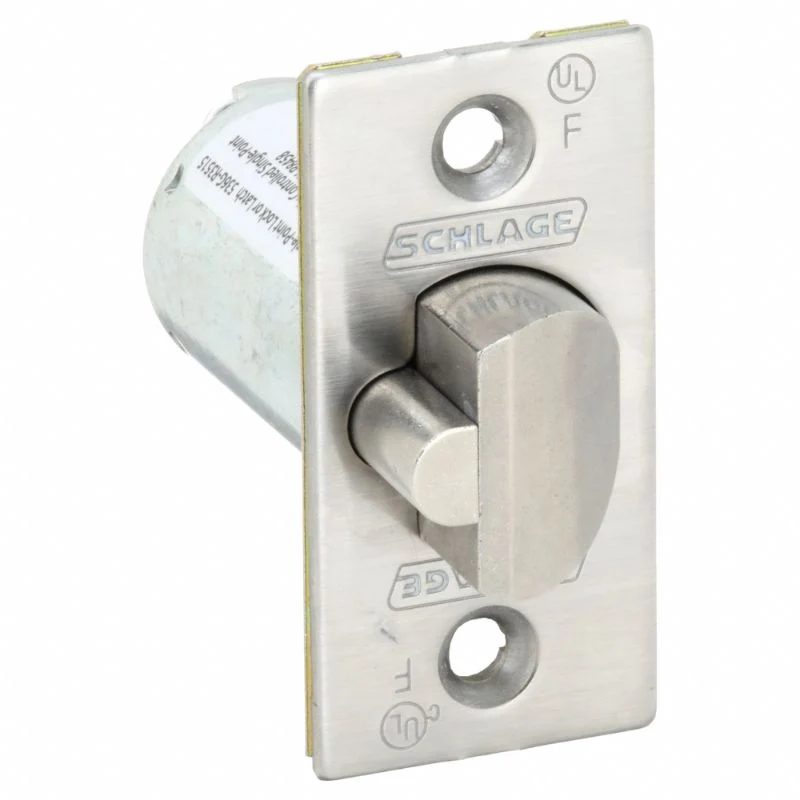
One visit answers it: we test the deadlatch, price repair next to replacement, and finish the option you choose before we leave. Estimates stay free.
Deadlatches secure shop fronts, office suites and apartment entries, but every door has its match. Browse our lock type resources below to see each function, its applications and our services.
Straight answers from King Locksmith Technicans to on {cylinder-type} questions customers ask us most.
(240) 345-1455
A deadlatch springs shut and resists a slipped card; a deadbolt is a solid bar you throw by key, built to take force.
Grade 1 under ANSI/BHMA A156.2, the bored lock standard, on any entrance; we accept Grade 2 on light-traffic interior doors.
Yes, when the lock carries a fire door label: it self-latches every close, and rated pairs commonly need the 3/4 inch throw.
Years on a well-hung door. What wears one out is a misaligned strike dragging the bolt every close, so alignment matters more than brand.